
Joseph Allen Stein: California Modernism in India
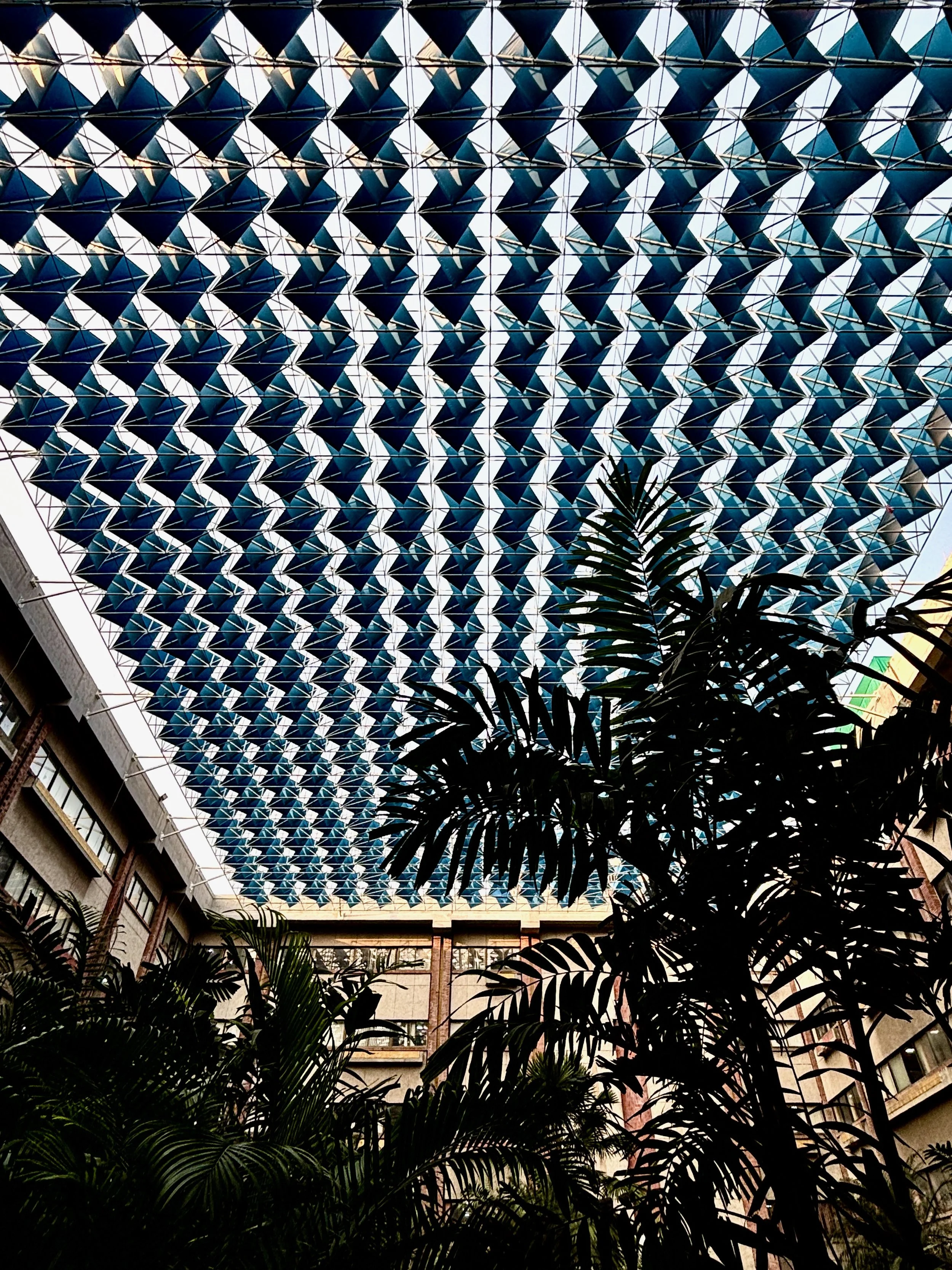
India Habitat Centre and its stunning sun canopy
Born in 1912 in Nebraska to immigrant Jewish parents from Eastern Europe, Stein studied architecture in Chicago, Paris and that stalwart of American design, the Cranbrook Academy of Art. The academy in Cranbrook had as its first head the notable Finnish architect Eliel Saarinen, who set up a strong tradition of hand- crafted design. The alumni of the school include some of the most important figures in American art and design including Charles and Ray Eames, Harry Bertoia, Florence Knoll and of course Eliel’s son Eero Saarinen.
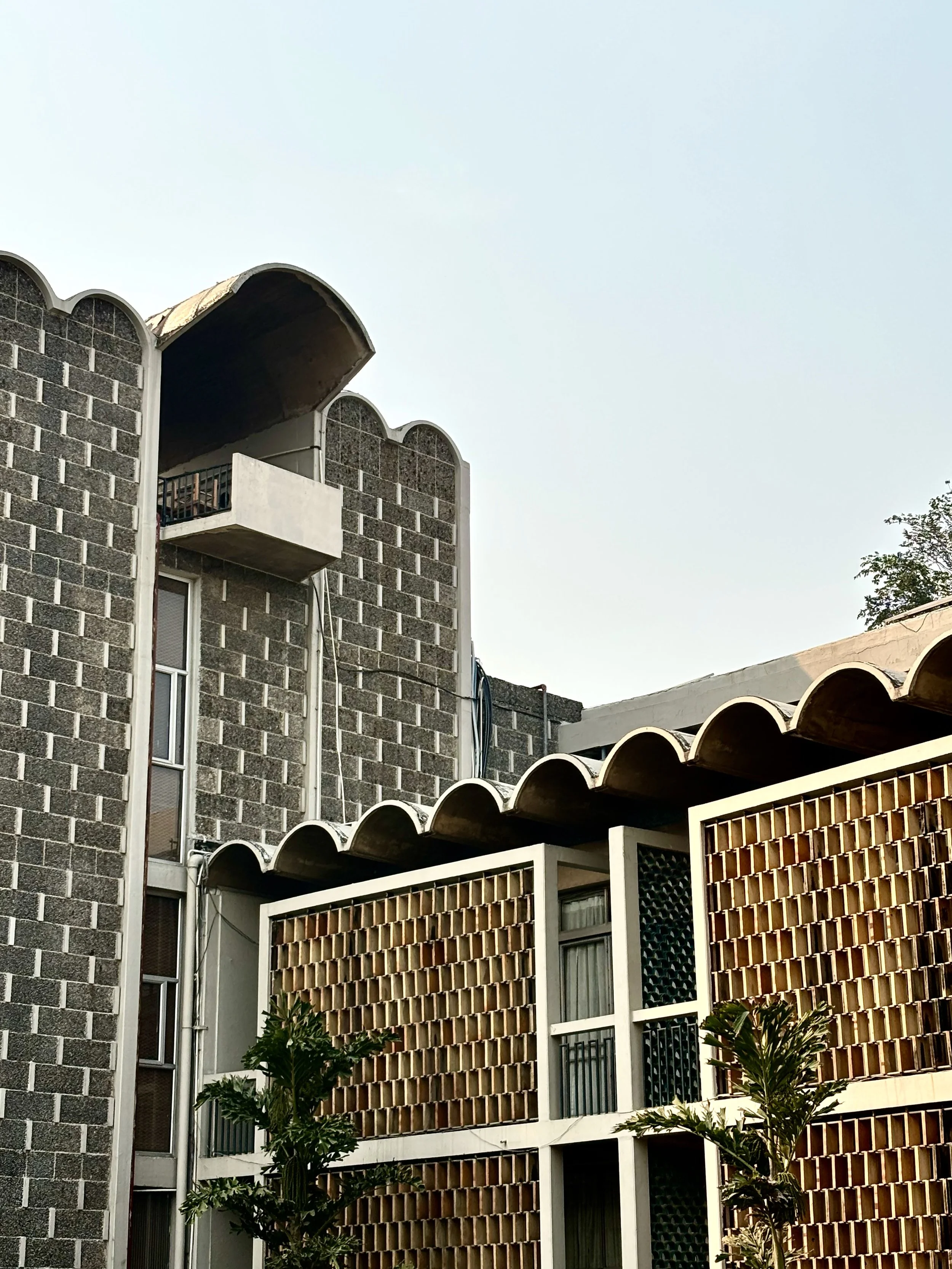
India International Centre
After a stint working in New York, Stein headed to Los Angeles in 1938 to work with Richard Neutra, and it is where he met Gregory Ain, an architect working to develop low and medium cost housing. A few years later he set up practice in San Francisco and became known for the design of affordable housing. According to Stein, a home for an average American family should cost only as much as an automobile. But his social activism, alongside Gregory Ain, brought him to the attention of that charmer Joseph McCarthy, and his name went on to a list of communist sympathisers held by the Attorney General. Stein decided that 1950 would therefore be a good time to leave the US, and he departed with his family for Mexico and then to Europe. By 1952 Stein had somehow arrived in India to take up a teaching position at the Bengal College of Engineering. This was a bit of good timing for Stein because India in that moment had stated to embrace the ideas of International Modernism with the arrival of the team in Chandigarh supported by PM Nehru to build that astonishing new city. In 1955 he moved on to New Delhi to set up a studio alongside fellow American Benjamin Polk.
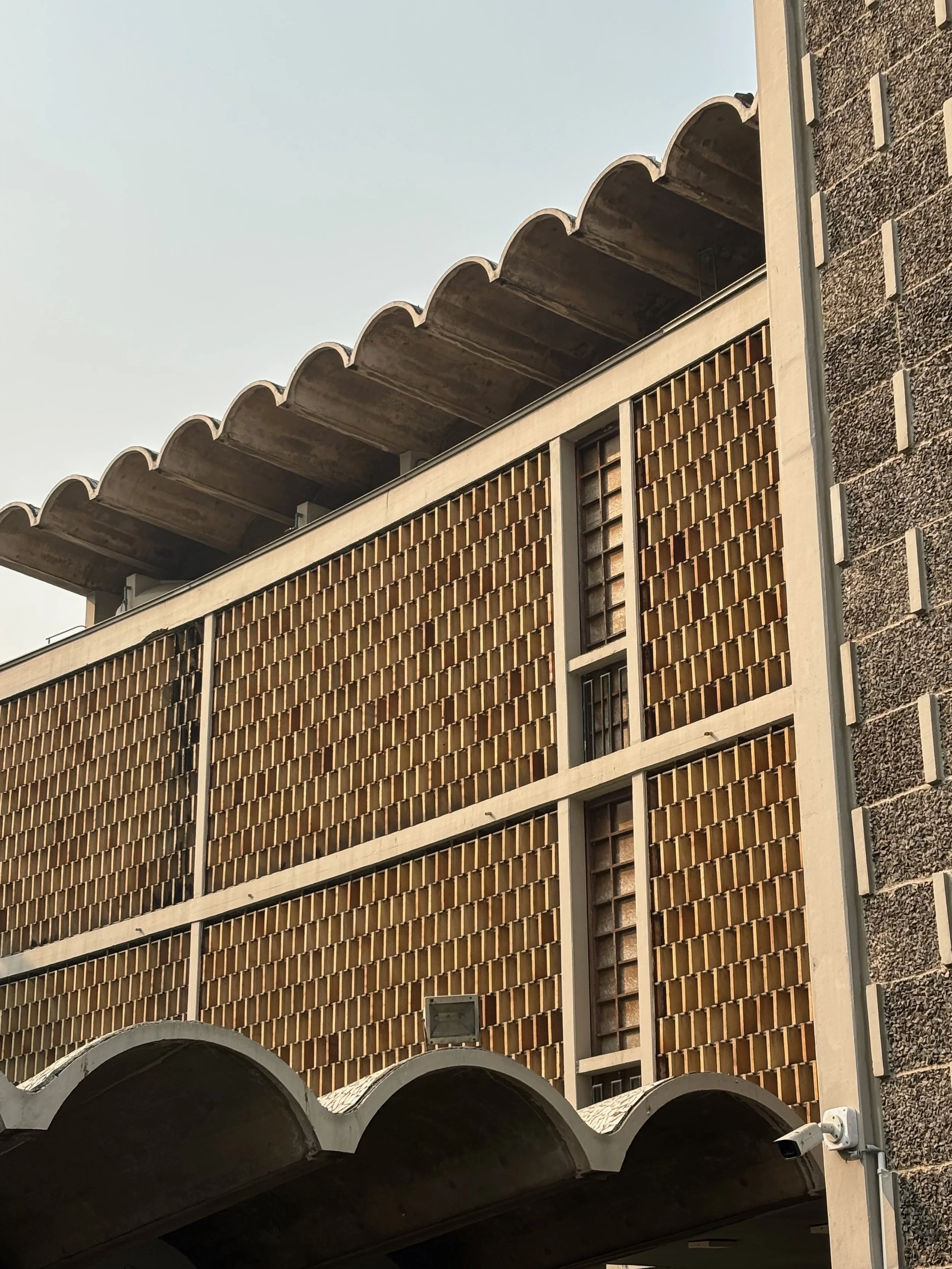
IIC
Stein’s architectural philosophy in India was characterised by an adaptive modernism. While he embraced the clarity and discipline, he focused on climate, local materials, and the quality of space. He managed to bring California Modernism but imbue it with an authentic sense of India.
New Delhi became Stein’s primary canvas. Over several decades, he designed a group of cultural, institutional, and environmental projects in the area just to the south of the Lodi Gardens. This district has now become known as “Steinabad.” It is not a formal district, but rather a zone unified by Stein’s architectural language of low-rise structures; exposed concrete softened with natural stone; delicately modulated skylights; and lush, integrated landscaping.
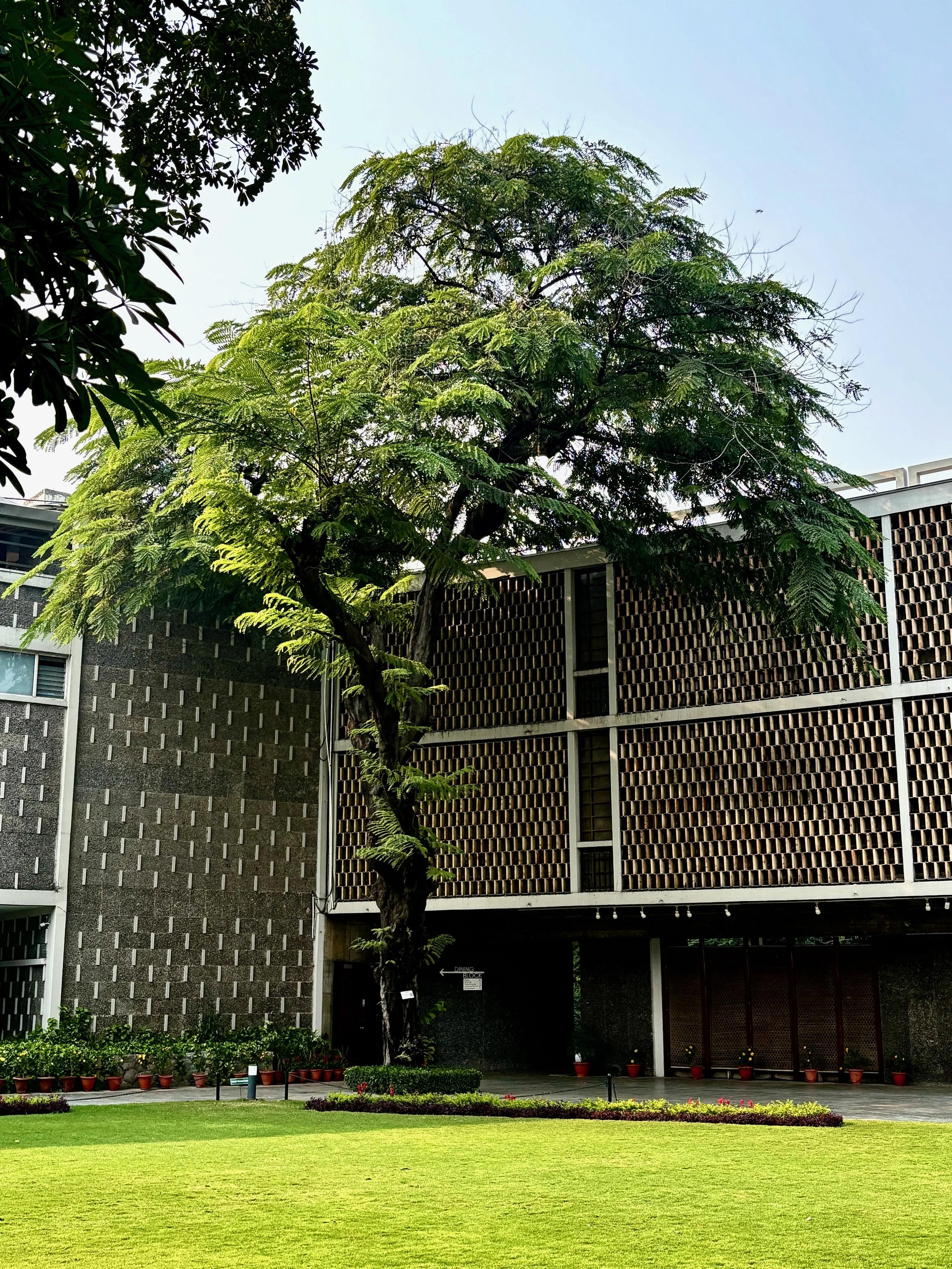
IIC
The India International Centre (IIC), completed in the early 1960s, became Stein’s most iconic contribution and forms the nucleus of Steinabad. Often compared to a monastery or cloister, the IIC is built around courtyards with shaded corridors and flowing gardens. Stein went on to expand the complex several times, ensuring that each addition harmonised with the original. In 2008 a poll of architects conducted by Outlook India, a weekly magazine, voted the IIC Delhi’s best building.
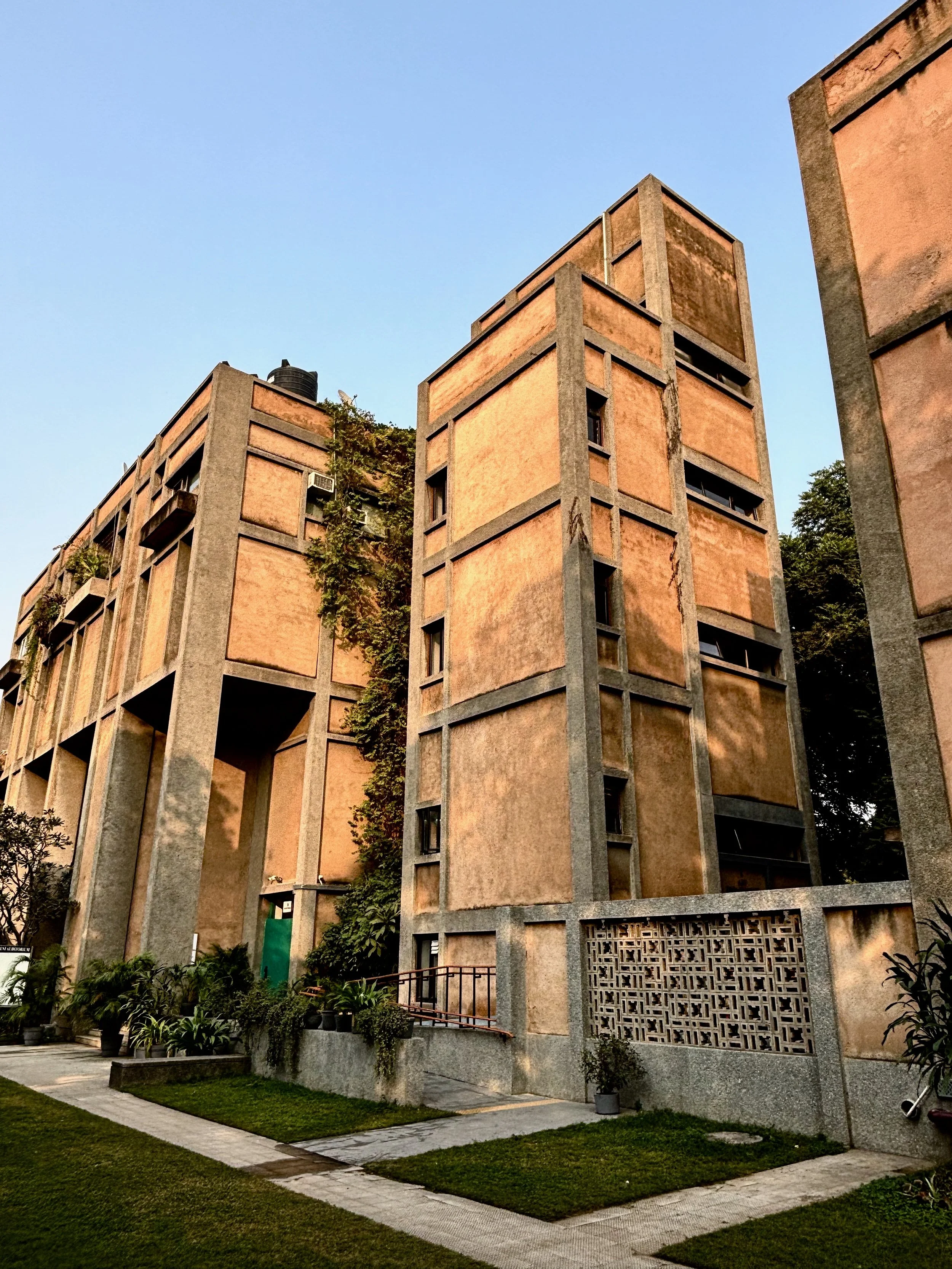
Triveni Kala Sangam Cultural Centre
Just across the way lies the India Habitat Centre (IHC),another major component of Steinabad. Conceived as a workplace and cultural complex for organisations concerned with sustainability and urban development, the IHC exemplifies Stein’s belief in shared space. Bridges, terraces, water features, and a central open-air plaza stitch together multiple buildings into a unified organism. Though completed after his retirement, it adhered closely to the master plan Stein prepared, and it remains one of Delhi’s most beloved public environments.
Stein’s imprint in the area extends to the Ford Foundation headquarters (tricky to get a look at as it is hidden behind guarded gates), the beautiful cultural centre Triveni Kala Sangam and numerous landscape designs. Beyond Delhi he designed in 1972 India’s first skyscraper, an elegant 25-storey building on reclaimed land in Mumbai which for a while was the tallest building in South Asia.
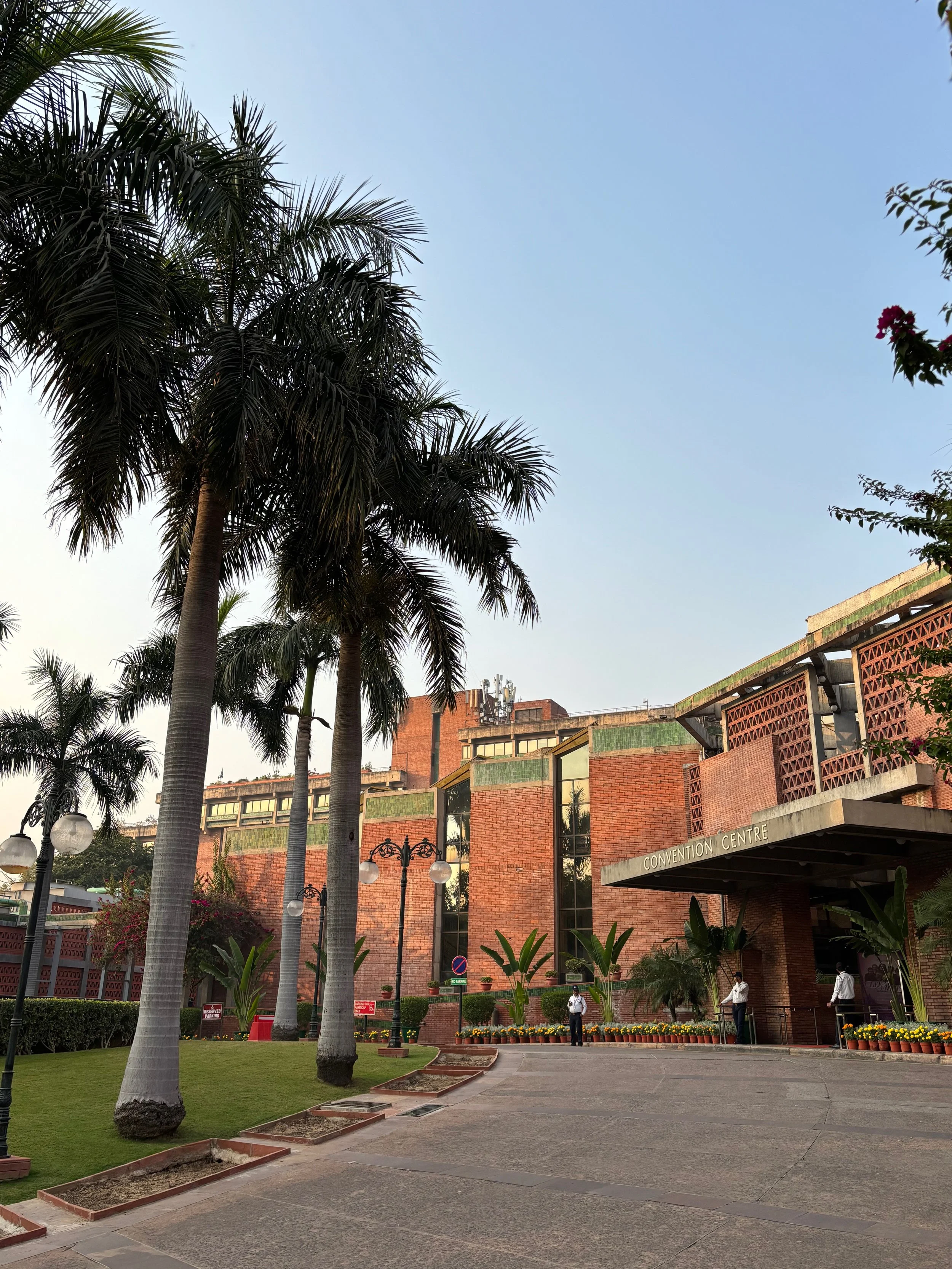
India Habitat Centre
Stein left a legacy that demonstrated a sensitivity to people’s use of urban space and it made him a pioneer of what we now call inclusive architecture. This humanism also extended to his understanding of craftsmanship. Stein frequently collaborated with Indian artisans, masons, and landscape workers, trusting their expertise and incorporating their methods into his designs. Joseph Allen Stein’s impact on Indian architecture is profound but understated — much like his buildings. He helped articulate a uniquely Indian modernism.
Stein was awarded the Padma Shri, India's fourth highest civilian honour, in 1992. He retired from practice in 1995 at the grand old age of 83. He died in North Carolina in 2001. And if you are ever in New Delhi and you have a spare afternoon to go for a walk, I suggest Steinabad. Afterwards head into the nearby Lodi Gardens, one of New Delhi’s most glorious green spaces stuffed full of ancient tombs from the 15th century, the era of the Delhi Sultanate.
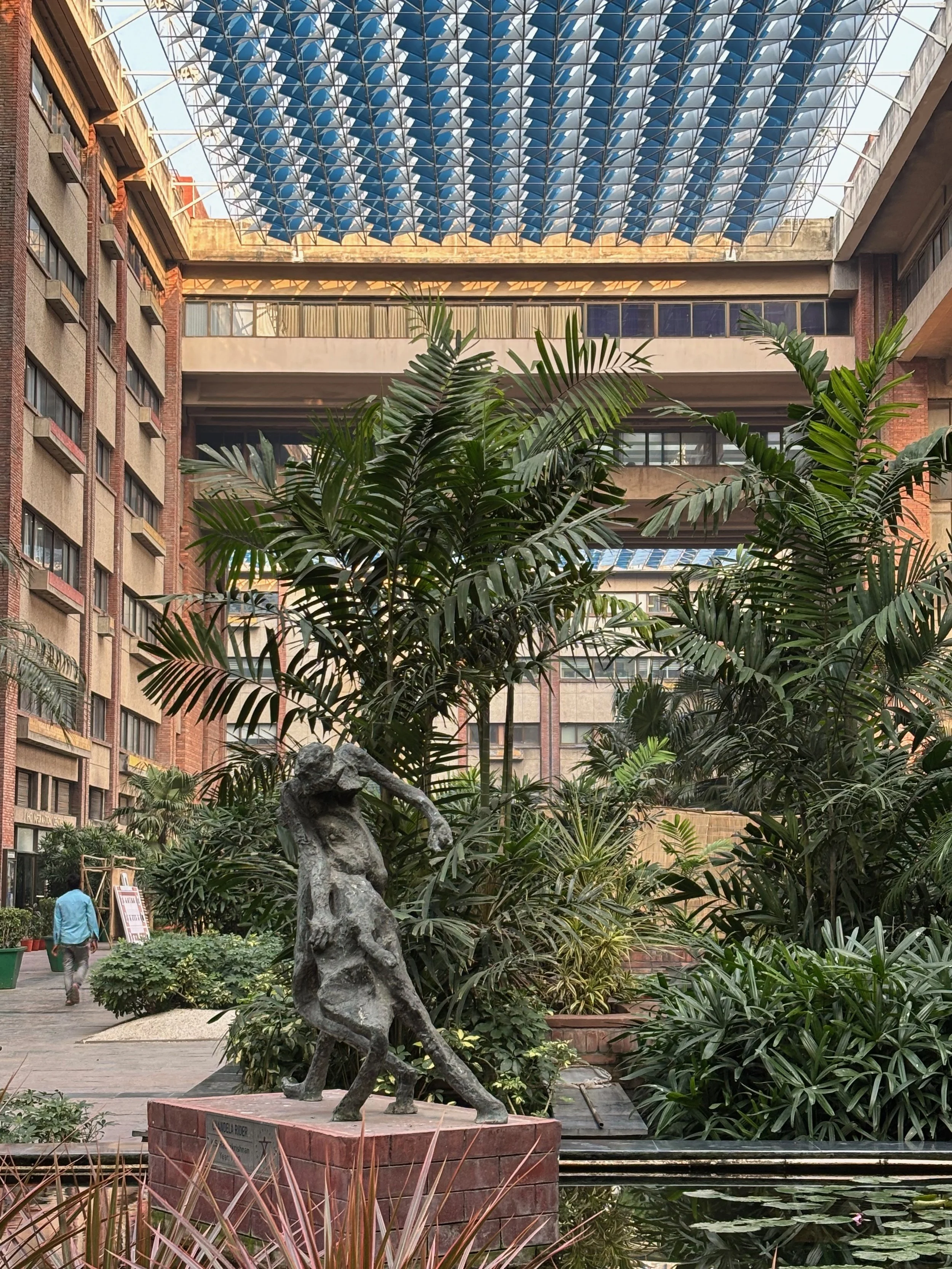
Courtyard of the IHC